|
|
Gameboard
Almost every lesson on the site includes a set of review questions. These questions are divided up to match some of the different styles of learning kids have. You can use the questions with any review activity, or with the gameboards provided below.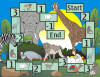
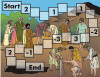

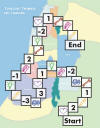
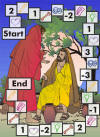
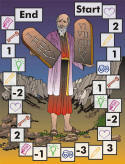
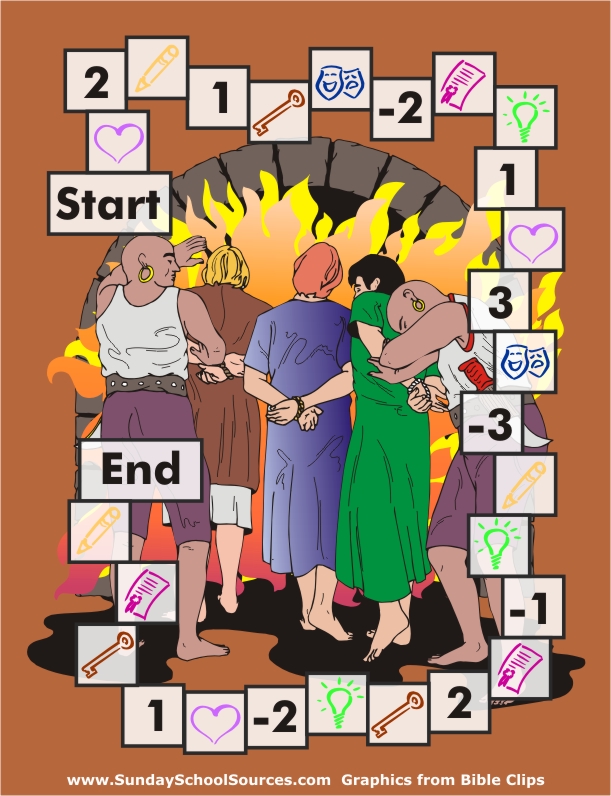
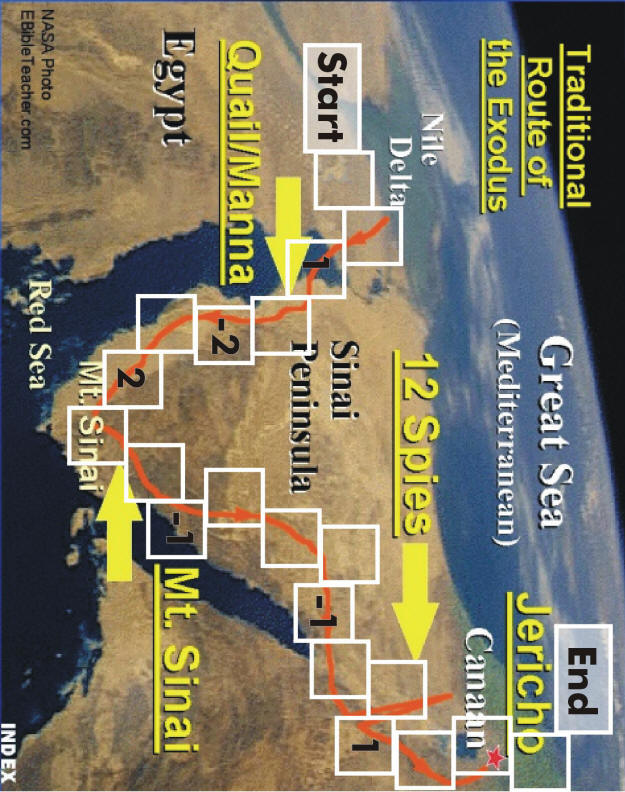
How to Play
Give the students game pieces (from other games or just coins or candy or whatnot). Place all pieces on start. Have each student roll a die and move forward the number of spaces they roll. If they land on a positive number, they move that many spaces forward too. If they land on a negative number, they move that many spaces back. When they land on a symbol, you ask them a question from the matching question category in the lesson. (i.e. if they land on a heart, ask an emotion question.) I don't penalize the students for wrong answers, we just correct the misunderstanding. First one to end wins.
If I have a single child in class, I move a piece as well but the child gets to answer all the questions. As you can see, this is primarily a way to review the lesson with the students while they think they are playing. It's also a way to make sure I explained the concepts so the students could understand. Using different types of questions helps the students who learn best by non-standard methods of learning (e.g. through movement or emotion).
Older students may want rewards for getting the answer right. Rather than give them an extra turn, I give them a token. Tokens can be turned in for stickers, pencils etc at a rate you set.
Below is a description of the types of questions asked, so you can create your own additional questions.
 linguistic questions
- e.g. repeat the memory verse, fill in the blank, unscramble, recite
 activity questions use spatial, musical, visual and kinesthetic
intelligence
activity questions use spatial, musical, visual and kinesthetic
intelligence
- e.g. demonstrate an action, draw an element, sing a song, solve a puzzle, locate an item on a map or picture
 emotion questions
- e.g. how did the character feel?, what bothered you most?, how would you have felt?
 application questions force students to apply the lesson to their
life
application questions force students to apply the lesson to their
life
- e.g. how should we handle the same situation? When have you come across this circumstance? what could the character have done instead?
 Fact questions use memorization and logical-mathematical
intelligence
Fact questions use memorization and logical-mathematical
intelligence
- e.g. name 3 of the characters from the story. how many animals did Job have?
 Review questions use all types of intelligence to review major
points of the lesson, or discuss issues the lesson addresses
Review questions use all types of intelligence to review major
points of the lesson, or discuss issues the lesson addresses
- e.g. who was the parable directed toward? why do bad things happen to good people?
Another factor to consider is the ability of the child to process information based on age and maturity. Younger children can memorize facts, explain what happened and apply the lesson to their life. Older children can study how the elements of the lesson interacted, can put together elements from different lessons and reach conclusions based on the lessons. Questions should be geared to challenge the students to reach the highest level of learning possible without overreaching their abilities. Of course, you may have to adjust the questions to the level of the class you are teaching.
For more information about using various learning styles and levels of comprehension in class, see the Teaching Tips page.
These ads
are randomly generated. If you see an inappropriate ad, please
contact me
with the url so I can block the ad.